The Twentieth Century gives me real insights into human and social issues that are still current in the 21st century.

Through this unit, I gained insight into twentieth century literature that challenged social and human issues of the time. Texts from this era include prose and poems that mirror the turmoil of undergoing two world wars, address social changes and ultimately experiment with the art of writing. When reading texts that explore human and social issues of the twentieth century, I was confronted with the realisation that many of these issues still occur today in a contemporary society. 

For my first blog, I was inspired by the writings of Gerard Manley Hopkins. In class we studied how Hopkins wrote poetry to express his faith in religion, using alliteration and imagery to elucidate his belief that God is omnipresent in nature. As religion is universally used to bring purpose to life and explain the ways of the world, Hopkin’s poetry is still something that people can learn from today. 

As depicted in my second blog, the human and political issues of the time are evident in Wilfred Owen’s poetry. This is particularly seen in ‘Anthem For Doomed Youth’ and ‘Insensibility’ where Owen highlights the dehumanisation that is evoked by war. Through these poems, I explored the notion that violence, greed, and other human flaws that are often the foundation for war, strips people of their humanity. As long as people still allow these negative yet universal human traits to drive their decisions, the issues conveyed in Owen’s poetry will still be relevant and therefore present in the twenty-first century. 

My third blog gave me profound insight into the human and social issues of the twentieth century that are still current today as I drew parallels between T.S Eliot’s ‘The Lovesong of J. Alfred Prufrock’ and a modern coronavirus-infested world. The protagonist Prufrock is a disconsolate man who feels isolated and bored within his life which was something I was able to relate to having just experienced a world-wide quarantine. I believe that this human issue of feeling isolated, and social issue of struggling to form connections with others, is one that transcends time and place and is therefore current in the twenty-first century. 

My fourth blog was inspired by Clarissa Dalloway from ‘Mrs Dalloway’. I experimented with rhyme, alliteration and imagery by creating my own poem that embodied the repression felt by Clarissa. Repression due to gender roles was a profound human and social issue in the twentieth century and is one that is still encountered today. This poem encourages modern readers to defy stereotypes by showing them the melancholic life of someone who does not obtain this courage. 

Lastly, my fifth blog was an analysis of W.B Yeats’ ‘A Prayer For My Daughter’. I address the human and social issue of superficiality that is still current today. The turmoil of living in a shallow world due to beauty expectations is just as regularly faced today as in previous eras. Through this poem, readers can gain hope and inspiration to pursue internal beauty and kindness which is a message that is pivotal despite time or place. 

Overall, I thoroughly enjoyed studying these texts as they helped me to grasp a better understanding of the world we live in today. 
Reviewing Teneille’s Blog

Link to Teneille’s Blog: https://thebestofliterature.art.blog/2020/08/25/a-picasso-cake/

Hi Teneille,
I really loved your blog this week! I was immediately intrigued to see how you were going to explore Picasso’s painting and you do this brilliantly through the ongoing metaphor of cake. I especially like how you refer to the colours, textures and details of the painting as ‘ingredients’ and how it takes time for them to become a cake after being mixed together, just like Picasso’s painting that at first glance can be overwhelming, but when you look closely you can see the image start to form. My only piece of feedback is to watch your grammar and word choices in some parts of the blog. For example, the wording choice of ‘bountiful’ in “a bountiful of flavour-some ingredients” does not make for a very cohesive sentence. Nonetheless, the overall idea and symbolism behind the blog was great and I really enjoyed reading it 🙂

A Powerful Poem

For my final blog I decided to reflect on the literature we have read and explore the power of one of the poems I found to be most interesting. That is W.B Yeats’ ‘A Prayer For My Daughter’. This poem explores Yeats’ concern for his daughter’s future and the person she will grow up to be. It highlights the turmoil of existing in a modern world that can be superficial and cruel, yet his hope that his daughter will grow up to be someone who embodies internal beauty in spite of this. I think this is a powerful message as it criticises the world and society we live in whilst simultaneously encouraging individuals to seek internal beauty rather than superficial beauty.

The poem begins with the persona, who we assume to be Yeats himself, praying for his daughter. He uses personification to describe a thunderstorm that is “howling, and half hid” while his daughter is “under the cradle-hood and coverlid”. The juxtaposition between a violent storm and peaceful sleeping baby suggests Yeats’ hope that his daughter will be unharmed by the world around her. It implies that the persona is desperate to protect his daughter from more than just a physical storm, but the cruelty of contemporary society.

At the beginning of stanza three Yeats goes on to say what I personally found to be one of the most powerful lines in the poem: “may she be granted beauty and yet not beauty to make a stranger’s eye distraught, or hers before a looking-glass, for such, being made beautiful overmuch, consider beauty a sufficient end, lose natural kindness and maybe the heart-revealing intimacy that chooses right, and never find a friend”. Here, he suggests his desire to protect his daughter from undesirable attention as sometimes physical beauty can attract harm. This is because people are too concerned with the physical beauty of things and forget about the more important internal beauty, such as kindness and humility. Thus suggesting that he wants his daughter to embody qualities of internal beauty rather than letting society brainwash her into becoming overly-concerned with physical appearance. This is a message that I believe is important and powerful as it is applicable to all readers as everyone has fallen victim to societal beauty standards at some point in their life.

Reviewing Delaura’s Blog

Link to Delaura’s Blog: https://delauracauchi.wordpress.com/2020/08/28/the-love-song-of-j-alfred-prufrock/

Hi Delaura, I chose to peer review your blog this week as T.S Eliot’s ‘Love Song of J. Alfred Prufrock’ is one of my favourite poems and I was curious to read someone else’s thoughts on it. I found it interesting when you said that our fate is merely to wander through life as aimless fools and that because of this we fill up our time with frivolous activities, such as working and learning. I think this encapsulates the meaning behind Eliot’s poem really nicely. I also like how you then question the purpose of your life as it encouraged me to reflect upon my own life purpose. My only critique is to be careful of spelling and grammar (wander instead of wonder. Also need a question mark at the end of “shall I part my hair behind”). Overall a really great blog and I look forward to reading more from you 🙂

An Ordinary Day

An Ordinary Day

A quiet day at home
…………….yet not quiet enough to feel alone.
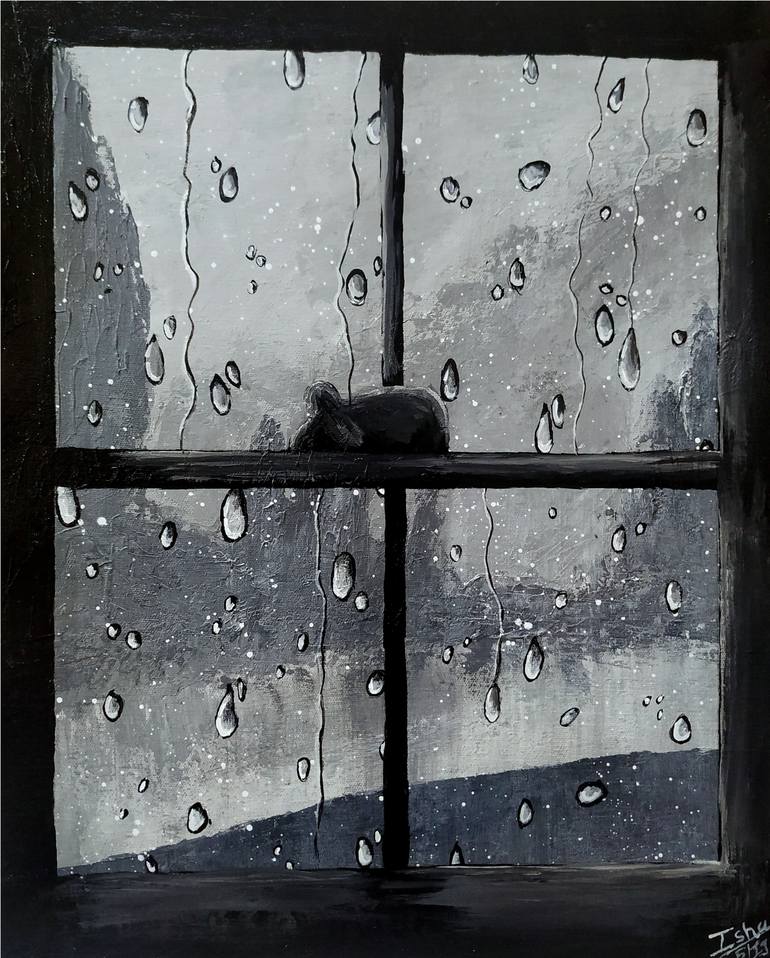
Music greets the pouring rain and I look out to my window,
Pondering on what I can do today.
I wish to go out to town; shop, smile and stroll,
But the harshness of the storm has put those thoughts to bay.

I wander around these white walls,
……………. trapped within empty rooms with cold floors.
The kitchen cupboards are filled with possibilities;
Bake a cake, cook a pie, make a roast, create a feast.
The bookshelf is dusty, begging to be entertained;
Read a page, meet a character, save a damsel, fight a beast.

The clock strikes quarter to two in the afternoon,
……………. I’m sure purpose will find me soon.
The rain continues to pour down the side of my house,
Making me long for company, a friend to talk to, a lover to hold.
I blame the rain for wasting my days, my night, my chance to find
someone to talk to, someone to love before I’m too old.

I look to my cactus in its little grey pot,
…………….. left alone to wilt away, we’re left lonely to rot.
The clock on my wall comes to a halt at three o’clock
And the sun breaks through my living room, but my mind is clouded grey.
The rain has stopped and there’s still time to be spent,
I could go out and find a purpose… but I’ll wait another day.

A short reflection on my poem:
When reading Virginia Woolf’s Mrs Dalloway, I was confronted with themes of entrapment, gender roles, mortality and many other melancholic ideas. The protagonist Clarissa decides to host a party, putting all of her time and effort into this social event as she believes she has no other talents. This idea is explored in my poem through the persona’s reliance on finding someone to give her purpose rather than taking up one of the many hobbies she mentions. Clarissa is also confined to the domesticity that her gender role has placed on her, mirroring the way that the persona in my poem feels trapped within her own house. I had a lot of fun experimenting with Woolf’s stream of consciousness style and use of motifs by delving into the mindset of Clarissa Dalloway in this poem.

*Images attained from google images

Reviewing Emilee’s Blog

Link to Emilee’s Blog: https://emileemcnaught.wordpress.com/2020/08/14/oh-what-a-night/

Hi Emilee, it was really great to read through your blogs. I think you have done a really good job exploring the themes seen in Van Gogh’s artwork ‘The Starry Night’ and using them to influence your poem. I especially love the first stanza where you use the simile “the magnificent swirling stars! Far from shy, their centres glow bright like the feet of cigars” as I thought this was very creative. I also like how you capture the dark colours and somewhat melancholic atmosphere that the painting embodies through the sad tone in your last two stanzas. As the painting is relatively abstract, I think it would have been nice to see some more language techniques such as personification and metaphors to reflect the abstract nature of the artwork. Nonetheless, great job and I look forward to reading more of your work 🙂

Experiencing the life of Prufrock

I have read T.S Eliot’s poem “The Lovesong of J.Alfred Prufrock” a myriad of times, in fact I have even done a blog on it before (https://literaturewithanna.art.blog/2019/09/27/the-lovesong-of-j-alfred-prufrock/). However, when reading it, I have never once tried to relate to the persona’s experiences or pondered how I too have felt his loneliness and boredom.

To reiterate what was said in my previous blog and give a brief overview of the poem; “T.S Eliot’s modernist poem ‘The Lovesong of J.Alfred Prufrock’ is set in a dull city, and its protagonist is a disconsolate man who is afraid of living and therefore feels bored within a monotonous society… Eliot insightfully explores how the mundane, ritualistic nature of modern society can leave one in a state of emotional paralysis”.

Although being written in 1915, I think this poem has profound significance in a modern society, specifically due to the Coronavirus. We have been encouraged to limit our social interactions and have been forced to work and study from home, making life feel mundane and dull, which is exactly what Prufrock talks about. Personally, I enjoy going out, seeing my friends, eating at cafes and even studying in my uni’s library. Yet this absurd situation has taken away these pleasures in life, helping me to relate to Prufrock. This shared sense of boredom within one’s life is something that Prufrock and I have therefore both experienced.

T.S Eliot uses a wide range of language devices to convey Prufrock’s experience. Through synecdoche, I understand Prufrock’s observation of “arms that are braceleted and white and bare,” to exemplify isolation from people as he fails to see them as whole. This sense of isolation is especially relevant living in a Covid infected world as social distancing has made us almost forget how to interact with other people.

Overall, I think that in a current society experiencing Covid-19, T.S Eliot’s “The Lovesong of J.Alfred Prufrock” makes for a good read as we can find similarities between Prufrock’s perspective on life and our own.

The Love Song of J. Alfred Prufrock….(Abridged) | Thus I Wrote
Image Retrieved From: https://thusiwrote.com/2015/01/21/the-love-song-of-j-alfred-prufrock-abridged/

Reviewing Evelyn’s Blog

Link To Evelyn’s blog: https://literaturetalk.home.blog/2020/08/11/breathe/

Hi Evelyn, I really enjoyed your blog this week and your depiction of Spring. You use lots of imagery to paint the picture of a beautiful Spring day and by reading this, I can imagine the sensations that Spring instills. I love the way that you personify nature, such as “the sun peeping a smile over the bushes” as it brings a positive and happy feel to your poem, perfectly capturing the feelings a nice Spring day can evoke. You have used the first line of Hopkin’s poem really well, my only recommendation is to also experiment with the language techniques he uses, including rhyme, alliteration, and much more.

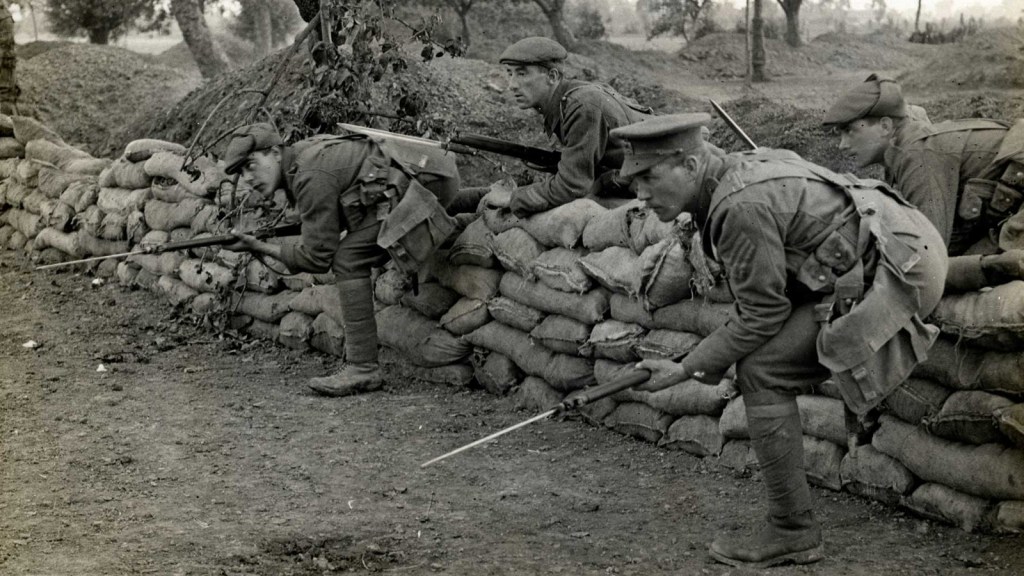
The Realities of War as depicted by Wilfred Owen

How do Wilfred Owen’s poems show the harsh realities of war, specifically the way that war strips people of their humanity?

Wilfred Owen’s poem ‘Anthem For Doomed Youth’ depicts the sense of doom and tragedy that is evoked by war. He uses a range of language devices to establish this notion of dehumanisation through war, such as the simile “what passing-bells for these who die as cattle?”. Here, Owen asks us to ponder on the way that human beings treat each other in war, comparing the traumatised soldiers to dead cattle. This line really resonated with me as it perfectly captures the harsh realities of war, conveying the way that soldiers in war are killed like slaughtered animals and the lack of dignity these young men obtain when being treated this way. Through Owen’s words, it is highlighted that death was something so common that the tyrants waging war essentially desensitised the horror of battle. Hence, Owen challenges readers to take on the experiences of these soldiers and elicit pity and mercy for these young men that are essentially ‘doomed’.

After the lecture, I also went on to read Owen’s poem ‘Insensibility’ which further establishes the way that war strips people of their humanity. The repetition of “their” in the 3rd Stanza (“their spirit” … “their old wounds”) dehumanises the soldiers as they are not referred to by name, and by third person, thus desensitising their souls. There is no burden of their souls, for they are desensitised. The scars of war no longer ache as their blood is drained from them, when they die. The harsh weather, the cold winter days and nights, have made them become unaware of their physical, emotional and psychological wounds. Furthermore, the metaphor of “men, gaps for filling” depicts the young men as commodities who are put as replacements for the soldiers that have died. This line does not consider the young men who are fighting for their country as being their own individual person, but rather a necessity to winning a war, simply filling up a gap. Overall, conveying similar ideas seen throughout Owen’s poetry and exposing to us the harsh realities of war.

‘Life as a Soldier’, The British Library

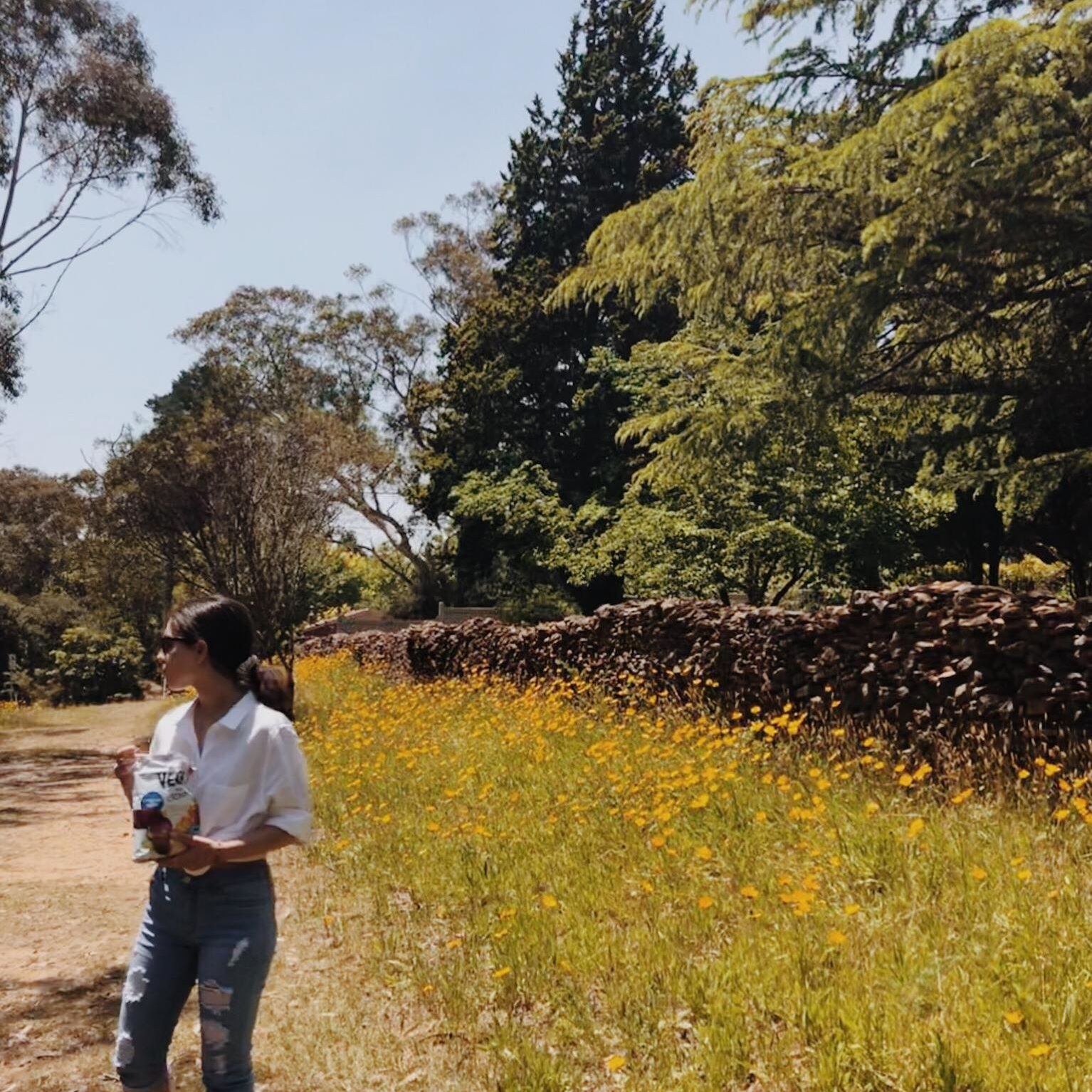
Golden

This week’s task was to take the first sentence of any Hopkins poem and write my own poem about the arrival of Spring. Many of Hopkin’s poems such as ‘God’s Grandeur’ and ‘The Starlight Night’ are the same length, consisting of only two stanzas, and follow the rhyme pattern A B B A A B B A / C D C D C D. His poems experiment with language, specifically aural imagery and alliteration. These are all things that have influenced my poem.

Nothing is so beautiful as Spring —
Ice melts as cold nights perish and there are no more chills
I look to the sky as the birds dip and dance over daisies and daffodils
Bees buzz by my ears and I’m in love with their sting
Trees swoop and twirl, leaves tangle and swing
I run to the lake, a smile splashes on my face and my joy overfills
For Paradise is upon us and serotonin Spring instils
As I fly through these fields of yellow, my heart will sing

Clouds glide through my hair, weeds tickle my feet
I close my eyes as sparkling rays whisper in my ear
This burn on my skin of gold and richness is so sweet
Not a single drop of rain or grey cloud is near
As I stand here in this immensity of colours I am complete
Because Spring is among us; beauty is here