Nineteenth Century human and social issues that are prevalent in the 21st Century

This unit deepened my originally very limited knowledge of Nineteenth Century literature. Blogging taught me about a range of historical movements that involved revolutionary social change, technological advancements and political debate. I thoroughly enjoyed exploring numerous writers and artists whose impact and perspective on the world has shaped the current society we live in. However, despite the progress that has been made on a number of human and societal issues, these nineteenth century writings are still relevant today as many of these problems continue into the twenty-first century.

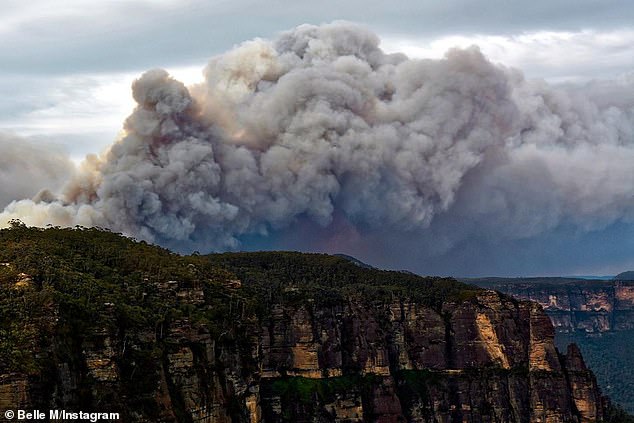
For my first blog, I wrote a poem about a time when nature was the teacher. This poem reflected ideas seen in Wordsworth’s poetry, specifically in ‘The Tables Turned’ where he says “let Nature be your teacher”. My poem confronts humanity as a whole and questions the way we treat our environment, looking towards the 2020 Australian bushfires and how they were a message from nature, pleading us to be better. Wordsworth’s poems urge readers to learn from nature which is a notion that is still relevant today due to environmental issues caused by human behaviour.

In my second blog, I continue to explore issues that are transparent in both a contemporary and nineteenth century society by delving into a study of ‘The World is Too Much With Us’ by William Wordsworth. In this sonnet, Wordsworth suggests that humanity has become too concerned with materialistic desires and trends, and as a result we have lost our connection with the natural world. Personally, I feel that this statement is even more prevalent in our current society. As new materialistic objects are designed, and as technology advances, humanity’s connection with nature falters, and the wisdom that is evoked by interacting with nature becomes less attainable. Through this blog, I gained clear insight into the human and societal issue of consumerism that continues to grow as society moves further away from living simple lives in nature.

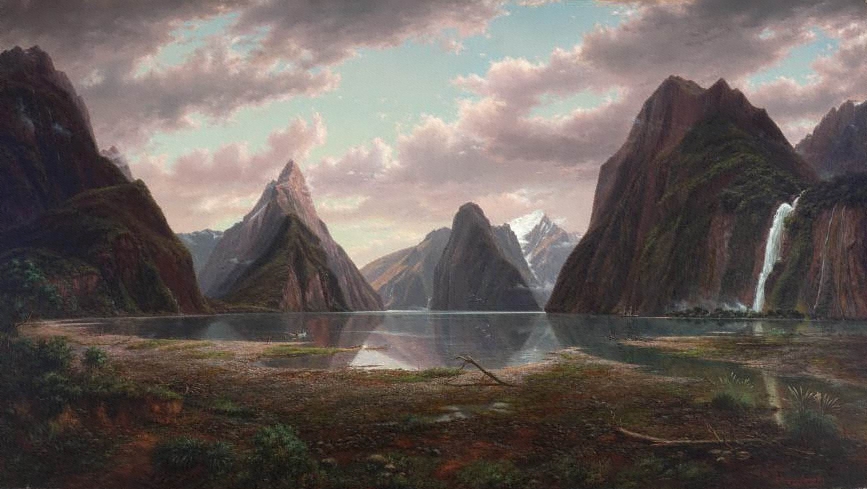
My third blog portrays Romantic ideas seen in ‘Milford Sound’ by Eugene Von Guerard. I discuss the sublimity of nature embodied through the painting, and its rejection of Enlightenment ideals that focused on scientific reason and hierarchical status rather than the beauty of nature. This Romantic belief that nature is divine and that interaction with nature stimulates one mind, is a notion that I believe has not been fully accomplished in contemporary society. In the twenty-first century many people are occupied with the idea that money and career success will bring happiness, therefore I think the message that Romantic artworks portray is necessary to remind people that interaction with nature is the ultimate way to internal fulfilment.

My fourth blog is a letter to Charles Dickens where I commend him on his confrontation of human and societal issues addressed in his novel ‘Hard Times’. The novel explores how humanity had become overly concerned with factual information and necessary human qualities such as compassion and modesty had lost value. This idea that we need to re-focus on our humanity rather than false ideas of knowledge through academia is seen in Romantic poets’ works such as Wordsworth and Shelley. This is applicable to current society where people have become overwhelmed by monotonous city life and lost an appreciation for basic human qualities.

Overall, despite improvement on multiple human and social issues, there are still many issues from the nineteenth century that are visible in our current society. A study of nineteenth century literature can confront people into realising these issues, and encourage one to help make a change.
Reviewing Cameron’s Blog

Link to Cameron’s blog: https://cameroncole.home.blog/2020/04/07/in-words-either-poetry-or-prose-vividly-describe-one-of-the-paintings-that-you-saw-on-our-virtual-tour-of-the-gallery-last-week/

Hi Cameron, I chose to peer review your blog this week as I was given this artwork in my quiz and was curious to read someone else’s thoughts on it. I really love the detail you give in your description of the painting. The highly descriptive language shows that you have thoroughly considered Westall’s intention behind every aspect of his painting. I especially liked how you said that “some trees find themselves still green, the hint of browning that tinges their leaves alludes to the inevitability of their deterioration” as this was an idea I had not considered. My only suggestion for a way to make this blog even better is to incorporate some Romantic themes into your description. For example, extending on this idea of gloom and the painting’s eerie atmosphere by saying that it creates a sense of authority in nature, humbling us as humans to realise our place in the world: an idea that was deeply embedded in Romanticism. Overall I think you did a really great job 🙂

A Letter to Charles Dickens

Dear Charles Dickens,
I am writing this letter to commend you on your exemplary depiction of real deficiencies in human behaviour and criticism of the education system in the Victorian era seen in ‘Hard Times’. I am in admiration of your novel as it exposes the negative effect of industrialisation on society as people became overly concerned with statistics and factual information. I can relate to your feelings of great disdain towards Gradgrind’s education system that focuses on the consumption of information, specifically calculations and figures. I believe that the character of Gradgrind perfectly epitomises authoritative figures in the Victorian age who thought that people should only be concerned with facts and this is all that children should be taught at school for creativity and imaginative processes are impractical. This belief that many people carried at the time was problematic as necessary human qualities such as compassion and modesty were dismissed due to the primary focus on information. I think you portray this brilliantly through Gradgrind’s influence over his children as he becomes disappointed and manipulative when Tom and Louisa show interest in the circus. They are taught to not be imaginative and wander about the world, which creates real human deficiencies such as the inability to form genuine connections with people and the deprivation of joy. These characters are a reflection of people in society, urging for change to be made which I think is admirable. Therefore I would like to say thank you for writing your novel.

Kind Regards,
Anna

Reviewing Teneille’s Blog

Link to Teneille’s Blog https://thebestofliterature.art.blog/2020/03/16/wise-passiveness/

Hello Teneille, I really enjoyed your blog on ‘Expostulation and Reply’ as you clearly have a well-developed understanding of how one must be engaged in their surroundings to evoke a deeper understanding of the world – a theme that is addressed in many of Wordsworth’s writings. I liked how you immediately acknowledged the oxymoron of “wise passiveness” and used this to drive the rest of your blog, as well as adding in your own insight and experiences. When I read this poem, I was intrigued by Wordsworth’s argument that nature is the main source of intellect and that only by engaging with nature can one truly understand themselves and the world, and access knowledge. You touch on this when you mention that “Wordsworth writes that this form of understanding is not something that can be taught from books or logical thought” and when you say that “you might find [this knowledge] on a walk in spring, where the flowers bloom and glow beneath golden hours” but I would have loved to see even more on the significance of nature as this was a strong belief of Wordsworth’s.

Milford Sound

After viewing a wide range of artworks at the NSW Art Gallery, the one that made the strongest impression on me was Eugene Von Guerard’s painting “Milford Sound” as it captures the sublimity of nature brilliantly. This painting amplified my understanding of Romanticism as it dismisses Enlightenment ideals that focused on scientific reason and hierarchal status, but rather depicts the sublimity of nature. This notion of nature being superior and powerful was a typically Romantic concept.

I was instantly mesmerised by the vastness of the landscape Von Geurard has painted. My eyes were drawn to the salience of the lake, and then my eyes wandered up the mountains and into the sky. These layered elements of nature intensify the capacity of the landscape, accentuating its sublimity and thus our inferiority as humans who are minuscule in comparison to the immensity of the landscape. The large mountains that stand tall and seemingly reach into the sky remind us humans of our place in the world, humbling us into realising our subservience to nature. Also, the soft colours deliberately chosen by Von Guerard, such as gentle hues of purple, blue and grey further establish the beauty of nature which was a core theme in the works of Romantic-era writers. Furthermore, the wide shot used to capture the extensiveness of the scenery highlights the infinite quality of nature, alluding to its transcendence as the scenery extends beyond the confinements of the artwork’s small frame, suggesting that the beauty and superiority of nature is beyond human comprehension. This alludes to Romantic ideas of nature being sublime and evoking a sense of wonder and awe from the viewer.

Overall, my “virtual” excursion to the NSW Art Gallery profoundly deepened my understanding of literary themes such as Romantic ideas of nature. This was achieved by appreciating a multitude of artworks, specifically Eugene Von Guerard’s ‘Milford Sound’ which evoked a highly emotive response and stimulated a deep appreciation for the natural world.

*Eugene Von Guerard “Milford Sound” (1877-1879)

Reviewing Georgia’s Blog

Link to Georgia’s blog: https://georgiahoulihan.wordpress.com/2020/03/15/19th-century-literature-blog-post-2-letter-to-my-child-self-creative/#respond

Hi Georgia, I really enjoyed reading your blog this week. I think that the way you managed to analyse a poem in a creative and entertaining format is really smart. You do a great job at painting the scene as I was able to vividly picture the “glowing stars in the night sky” and the “snails climbing over dewy leaves” through your elaborate use of visceral imagery and descriptive language. Also, I felt myself being able to relate to this a lot and it gave me a sense of nostalgia as I cannot remember the last time I went outside and appreciated these little things, which I think is exactly the point that Wordsworth is trying to make. Therefore, you have encapsulated this idea brilliantly. My only suggestion for improvement is to not get carried away with listing the things you see as it can become a bit repetitive. Overall, I think you did a great job and I look forward to reading more of your work 🙂

The world is too much with us

After studying William Wordsworth in class, it is clear that his poetry has a recurring theme. This is the notion that humanity has become too concerned with materialistic desires and trends, and as a result we have lost our connection with the natural world. This is particularly evident in Wordsworth’s sonnet ‘The World is too much with us’ where we are told that “we lay and waste our powers” when we engage with material rather than nature. This poem was written in the 19th century, yet personally I feel it has even more relevance in a contemporary 21st century. As new materialistic objects are designed, and as technology advances, we continue to lose touch with nature more and more, and the spirituality and wisdom that comes from engaging with nature becomes less attainable.

A line that really stuck out to me in ‘The World is too much with us’ is when the persona says “little we see in Nature that is ours; We have given our hearts away, a sordid boon”. Here the persona is condemning society for not spending more of our time in Nature and not seeing it’s value, but rather focusing our energy on consumerist ideals. Wordsworth’s choice of words in “sordid boon” was interesting to me as this is an oxymoron. “Sordid” meaning immoral and dishonourable, and “boon” meaning something that is helpful and beneficial. Personally, I think that this contradiction alludes to the conflict between human potential being overridden by selfishness and greed. This notion profoundly applies to current society as many of us continue to waste our time with monotonous routine in order to reach shallow and superficial goals. Whilst I think that people can still learn from Wordsworth’s poetry, I wonder if the nature of society will ever really change.

The Orange Mountains

Write a poem about an experience in your life in which nature was the teacher:

This poem is about the recent bushfires in Australia and how humanity as a whole should learn from such a tragedy. Nature in this context teaches us that we should live simpler lives and treat the land with respect and care. A couple of months ago I went to a lookout in the Blue Mountains and was so in awe of nature’s beauty that the second I left I was already planning my next trip back. A couple of weeks later I went back to the same spot, only to see that it was closed off.  It had been ruined by the bushfires. 

I drive down the rocky roads; music loud and heavenly.
The trees humming in the wind.
The birds harmonise with it’s melody.
I take my seat upon this rock and cannot help but grin,
For the sun kisses my cheeks and it is the perfect remedy.

The birds don’t cheep.
The wind stands still.
The sun goes to sleep.
It’s time for me to leave, but return I will.

I drive down the rocky roads; music loud and-
Fire Danger Rating: Extreme
A ghastly orange shadow devours the land’s soul.
The forest that once sung now screams,
Shouting at us for what we stole.