
This unit has allowed me to deepen my originally very limited knowledge of Australian literature. These blogs encouraged me to analyse a variety of literary forms written throughout Australia’s complex historical and cultural context, thus resulting in a better understanding of my country’s history. In specific, studying the topic ‘Indigenous Australia’ evoked a deep sense of appreciation for Aboriginal literature and sympathy towards their experiences. However, despite my newfound appreciation for Australian literature, reading these works has also awakened me to realise that our country is flawed and essentially, an ‘unfinished product’. We must use past experiences to shape what our national identity will be.
The epiphany that Australia is not a finished product began with my first blog where I explored opaque and transparent poetry through an examination of Lisa Bellear’s ‘Woman of the Dreaming’ and Judith Wright’s ‘Niggers Leap, New England’. Wright draws attention to the exploitation that the Aboriginal people endured, whilst Bellear focuses on the crucial need for Aboriginal people to reclaim their ‘soul’ rather than focusing on their horrendous history. I found both these concepts interesting and applicable to a contemporary society as Wright forces us to acknowledge the problems in Australia’s history, and Bellear allows us to see how we can move forward from this in order to improve and redeem our incomplete country.
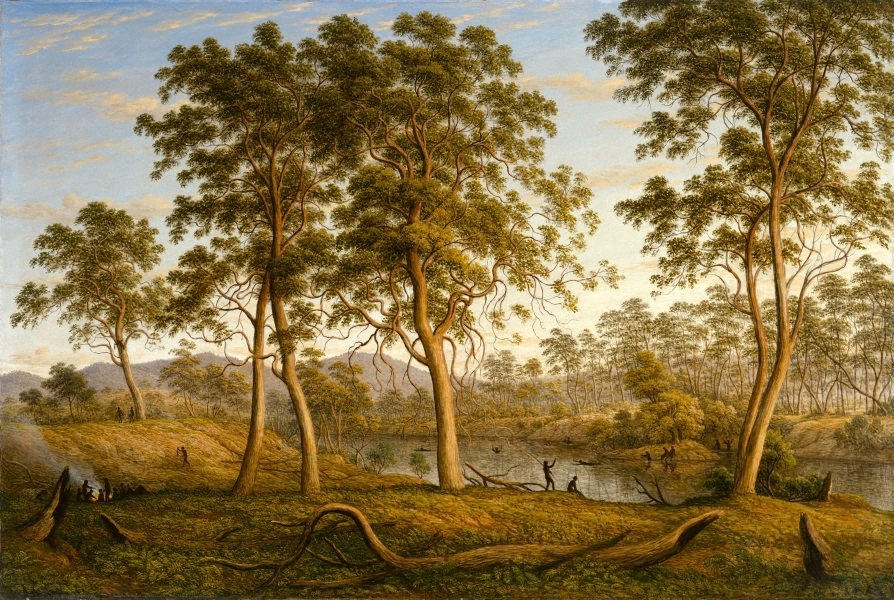
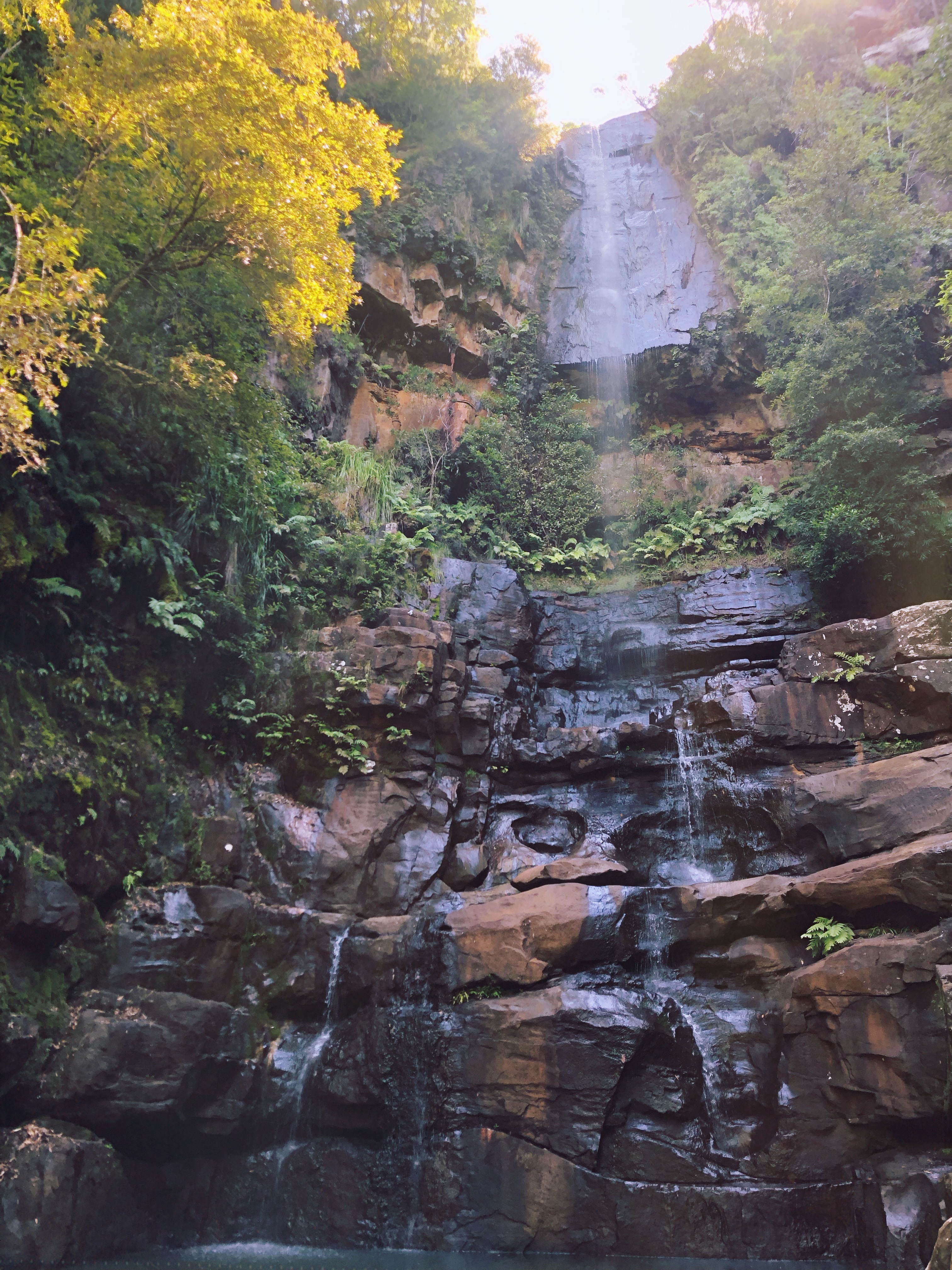
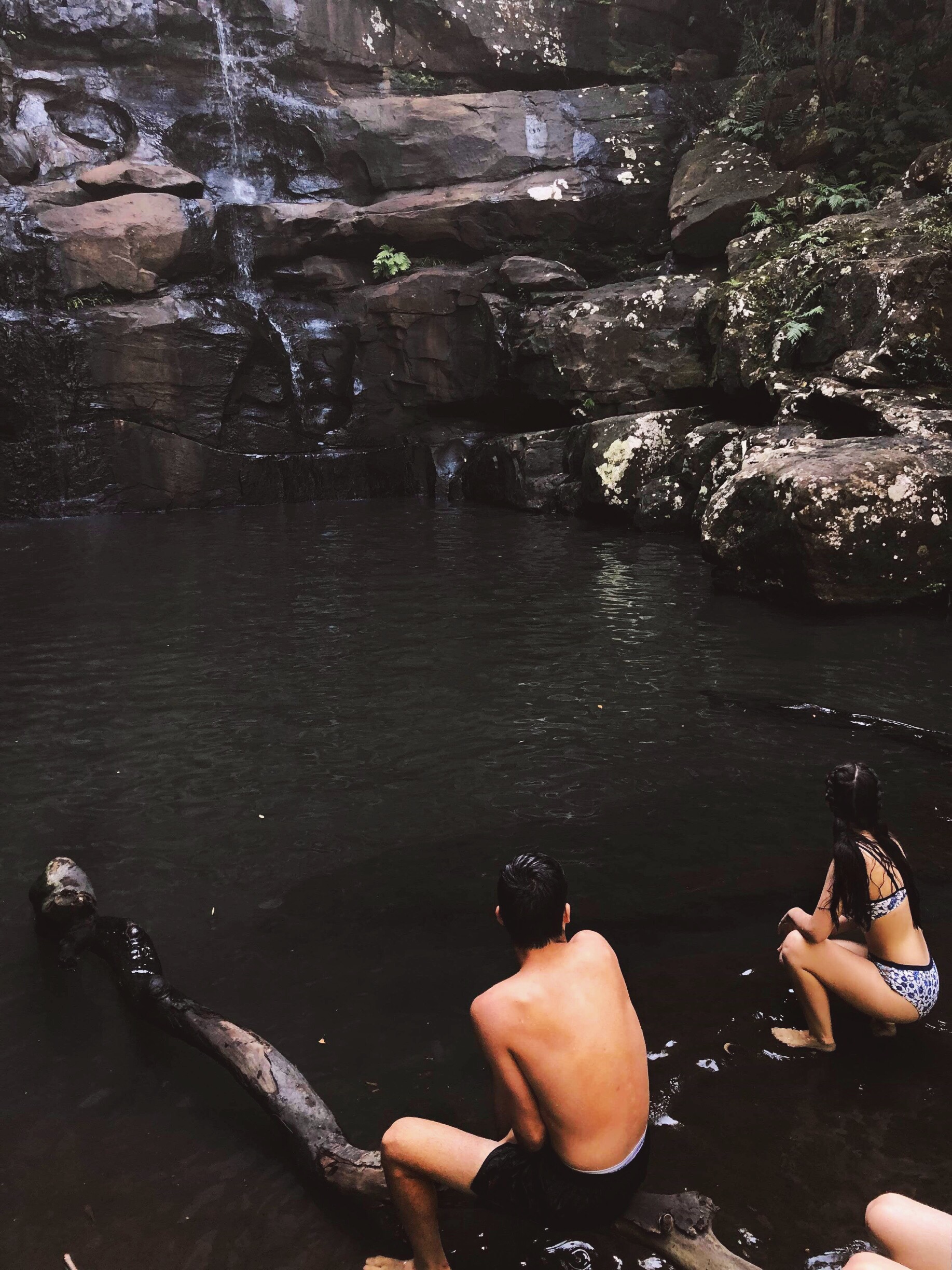
In my second blog, I decided to try something different and get creative by experimenting with writing a poetic stanza in the form of Banjo Paterson. I tried to mirror the style Paterson uses in ‘The Man From Snowy River’ through dialogue within the poem and the structure of my stanza. I also noticed how he talks about typically Australian concepts seen through his poem ‘Waltzing Matilda’, subsequently I talked about a personal experience I had hiking through the Australian bush with my cousins. I continued with this experiment in my third blog where I used ekphrastic writing to describe a John Glover painting. Both of these blogs inspired me to be creative and I realised that through writing my own poetry and prose, I was able to interpret these styles easier when doing the unit readings.
My fourth blog was a letter to Patrick White about my thoughts on his short story ‘Down at the Dumps’ which challenged me to be both creative and critical. I thought that his creation of Sarsaparilla incorporated a truthful insight into the state of our country. Characters embodied human tendencies to be shallow and caught up in matters that aren’t of import, such as reputation or materialism. Being caught up in these false ideals is unfortunately common in our society, proving that Australia is not a finished product. Therefore, other characters, like the Whalleys, represent qualities that our society should strive towards such as humility and optimism.
Finally, my fifth blog which I personally consider my best blog, unequivocally highlights the notion that Australia is not a finished product. I drew similarities between Both Eliza Dunlop’s ‘The Aboriginal Mother’ and Judith Wright’s ‘Rockface’ to show the racial differences and segregation that once occurred in our country, and how this is still prevalent despite being to a much lesser extent. I think that we as humans can always find ways to improve, and until we reach this full potential as a unity, Australia will remain an unfinished product.
Overall, Australian culture and identity is still being established. I think that our historical context needs to be recognised and learnt from before we can declare what it means to be Australian. There is no room for cultural segregation in a complete Australia, hence why it is such a prominent issue of concern in Australian literature.
 Literature with Anna