
I have always wondered how centuries after Shakespeare’s death, he still remains famous. His works are studied at a primary school level and university level. His plays are still being performed on stage all over the world. Even children’s films such as the Lion King have been influenced by the plots of Shakespeare’s plays. How is he still relevant?
On Monday my Shakespeare class embarked on a “virtual” excursion to the NSW State Library Shakespeare Room where I would engage with a multitude of Shakespeare’s works and this lingering question of mine would finally be answered.
Upon walking in the Shakespeare Room, the stained glass windows immediately capture your attention. They are seven separate images, depicting the seven ages of man from Shakespeare’s play ‘As you Like it’ (Act II, Scene VII). This consists of:
- The “infant, mewling and puking in the nurse’s arms”
- The “whining schoolboy with his satchel”
- The “lover, sighing like a furnace, with a woeful ballad”
- the “soldier, full of strange oaths, and bearded like the pard”
- the Justice who is “full of wise saws and modern instances”
- The “Pantaloon, with spectacles on nose, and pouch on side”
- The last stage: death “that ends this strange eventful history”

I was mesmerised by this concept and the beautiful stained glass windows that illustrated an entire life in seven simple pictures. I also understood a little more why Shakespeare is so important as these ideas that he presented and language that he used were not only ahead of his time, but revolutionary.
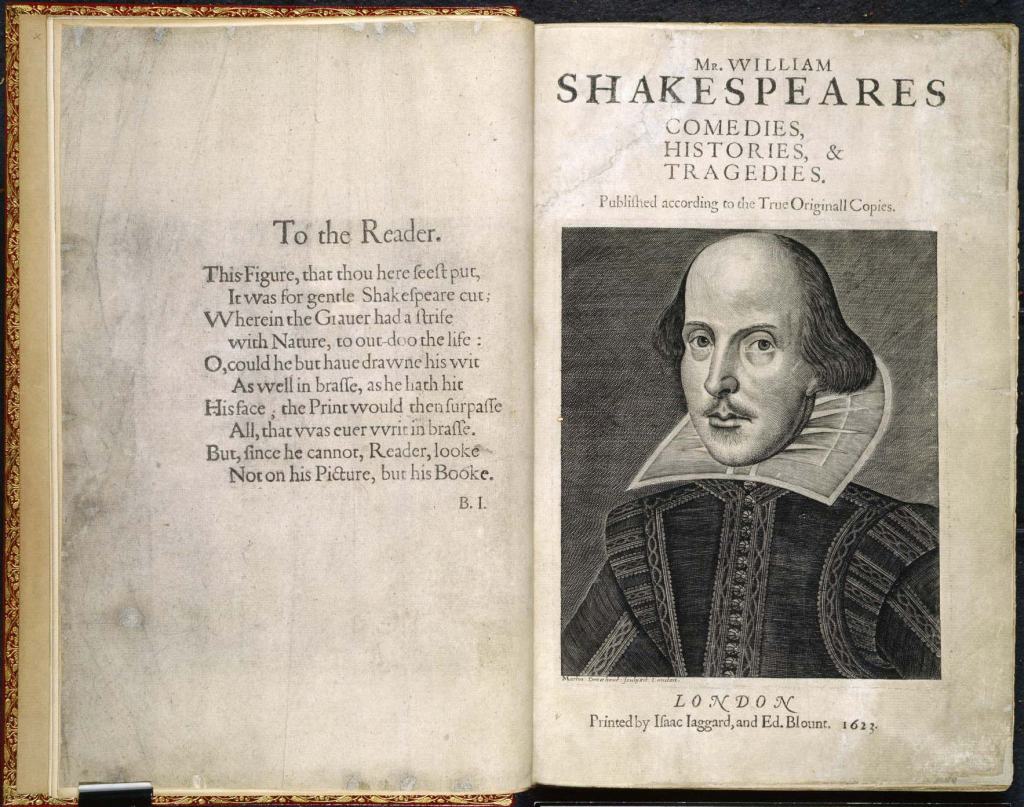
We then took a look at the First Folio which was published in 1623, yet still to this day is held in such high regard. With the exception of the Bible, this book is considered the most influential book in the English language, highlighting the importance of Shakespeare and his profound influence on society and culture.



 Literature with Anna