This unit deepened my originally very limited knowledge of Nineteenth Century literature. Blogging taught me about a range of historical movements that involved revolutionary social change, technological advancements and political debate. I thoroughly enjoyed exploring numerous writers and artists whose impact and perspective on the world has shaped the current society we live in. However, despite the progress that has been made on a number of human and societal issues, these nineteenth century writings are still relevant today as many of these problems continue into the twenty-first century.
For my first blog, I wrote a poem about a time when nature was the teacher. This poem reflected ideas seen in Wordsworth’s poetry, specifically in ‘The Tables Turned’ where he says “let Nature be your teacher”. My poem confronts humanity as a whole and questions the way we treat our environment, looking towards the 2020 Australian bushfires and how they were a message from nature, pleading us to be better. Wordsworth’s poems urge readers to learn from nature which is a notion that is still relevant today due to environmental issues caused by human behaviour.
In my second blog, I continue to explore issues that are transparent in both a contemporary and nineteenth century society by delving into a study of ‘The World is Too Much With Us’ by William Wordsworth. In this sonnet, Wordsworth suggests that humanity has become too concerned with materialistic desires and trends, and as a result we have lost our connection with the natural world. Personally, I feel that this statement is even more prevalent in our current society. As new materialistic objects are designed, and as technology advances, humanity’s connection with nature falters, and the wisdom that is evoked by interacting with nature becomes less attainable. Through this blog, I gained clear insight into the human and societal issue of consumerism that continues to grow as society moves further away from living simple lives in nature.
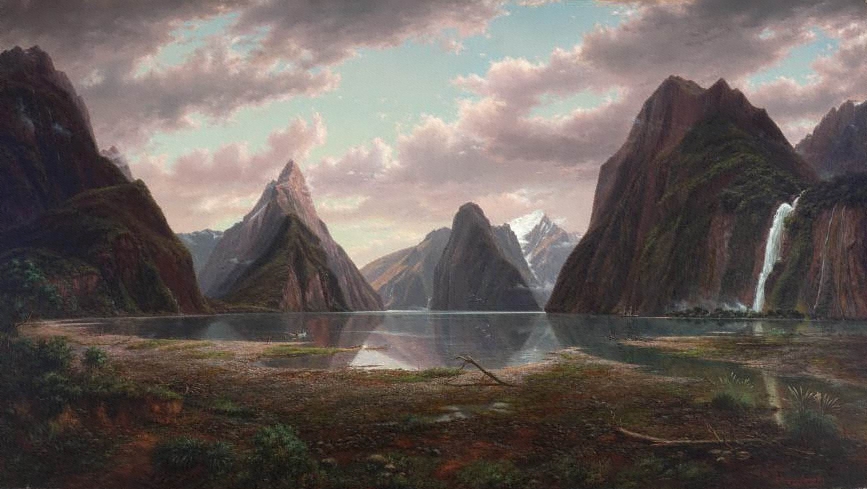
My third blog portrays Romantic ideas seen in ‘Milford Sound’ by Eugene Von Guerard. I discuss the sublimity of nature embodied through the painting, and its rejection of Enlightenment ideals that focused on scientific reason and hierarchical status rather than the beauty of nature. This Romantic belief that nature is divine and that interaction with nature stimulates one mind, is a notion that I believe has not been fully accomplished in contemporary society. In the twenty-first century many people are occupied with the idea that money and career success will bring happiness, therefore I think the message that Romantic artworks portray is necessary to remind people that interaction with nature is the ultimate way to internal fulfilment.
My fourth blog is a letter to Charles Dickens where I commend him on his confrontation of human and societal issues addressed in his novel ‘Hard Times’. The novel explores how humanity had become overly concerned with factual information and necessary human qualities such as compassion and modesty had lost value. This idea that we need to re-focus on our humanity rather than false ideas of knowledge through academia is seen in Romantic poets’ works such as Wordsworth and Shelley. This is applicable to current society where people have become overwhelmed by monotonous city life and lost an appreciation for basic human qualities.
Overall, despite improvement on multiple human and social issues, there are still many issues from the nineteenth century that are visible in our current society. A study of nineteenth century literature can confront people into realising these issues, and encourage one to help make a change.