
I have always wondered how centuries after Shakespeare’s death, he still remains famous. His works are studied at a primary school level and university level. His plays are still being performed on stage all over the world. Even children’s films such as the Lion King have been influenced by the plots of Shakespeare’s plays. How is he still relevant?
On Monday my Shakespeare class embarked on a “virtual” excursion to the NSW State Library Shakespeare Room where I would engage with a multitude of Shakespeare’s works and this lingering question of mine would finally be answered.
Upon walking in the Shakespeare Room, the stained glass windows immediately capture your attention. They are seven separate images, depicting the seven ages of man from Shakespeare’s play ‘As you Like it’ (Act II, Scene VII). This consists of:
- The “infant, mewling and puking in the nurse’s arms”
- The “whining schoolboy with his satchel”
- The “lover, sighing like a furnace, with a woeful ballad”
- the “soldier, full of strange oaths, and bearded like the pard”
- the Justice who is “full of wise saws and modern instances”
- The “Pantaloon, with spectacles on nose, and pouch on side”
- The last stage: death “that ends this strange eventful history”

I was mesmerised by this concept and the beautiful stained glass windows that illustrated an entire life in seven simple pictures. I also understood a little more why Shakespeare is so important as these ideas that he presented and language that he used were not only ahead of his time, but revolutionary.
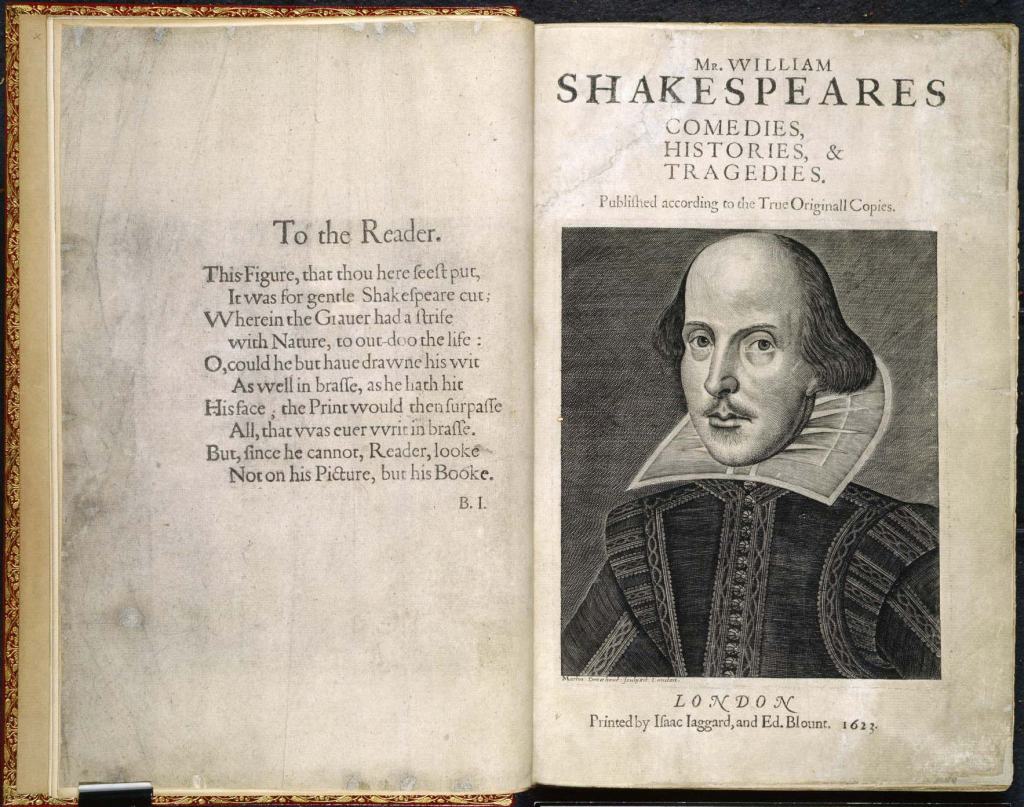
We then took a look at the First Folio which was published in 1623, yet still to this day is held in such high regard. With the exception of the Bible, this book is considered the most influential book in the English language, highlighting the importance of Shakespeare and his profound influence on society and culture.
 Literature with Anna
Hi Anna, great work. I too am amazed at the legacy Shakespeare has left on the world and the impact he still has on modern culture. I completely agree with you, as the stain glass window enhanced my understanding of the ‘As you like it’ speech as well. The line of the “lover, sighing like a furnace, with a woeful ballad” particularly stood out for me as the sighing in this line represents the individual acknowledging and learning the inevitable phases in life and adhering to his role as the teenage lover. This depicts the idea of how one never can embrace who they are, they merely appropriately act out the predicted stages in life, as Shakespeare suggested. I would have liked to know more about what you thought about the comments and ideas Shakespeare made about each stage in this speech. Shakespeare embedded so much meaning in every line of his works, i really liked your paragraph on how he is revolutionary! The Shakespeare room and the glass window was really intriguing and you have described the experience so accurately. 🙂
LikeLiked by 1 person
Hey Anna! You definitely chose a good blog topic for this week, as that covers the class virtual visit to the Shakespeare section of the State Library. I can definitely relate to your first point about how extraordinary it is that Shakespeare has become so much more famous and widespread, even in Australia which wasn’t nearly as explored and hadn’t been colonised yet. Which is definitely testament to how powerful his works were to different audiences over time. I think that it was a pretty pertinent point on how Shakespeare’s plays have influenced different stories such as the Lion king today, which also did well to broaden the focus of your blog to relevant topics outside the library that can serve to interest the reader further.
The reference that you made to the stained glass windows being compared to the play ‘As you like it’ (Act 2, scene 7), as far as the character roles and parallels such as the ”infant, the whining school boy, the soldier, the death character (recurring theme in Shakespeare’s work,etc is also a good example that you made of how Shakespeare’s work has influenced architecture such as the stained glass Windows post -Renaissance in Australia. As well as having influenced popular culture in the western world. Good job on mentioning all of those characters as well, as it is a thought provoking and inspiring display for the viewer to witness. I think that you did pretty well in referencing this as it links to Shakespeare’s work to Australia quite well also.
Lastly, I think it was good that you mentioned the ‘First Folio, alongside the date it was published (1623). it was informative that you mentioned how important it was to the English language alongside the bible during the 17th century perhaps. I think that you could have made some points on his literature influencing Australian Literature and the connection between Australia and the United Kingdom as far as cultural influence. Aside from that, I really enjoyed your blog post for this week, and think that you did a pretty good job.
LikeLike
It was really interesting to read your thoughts on the virtual tour of The Shakespeare Room at the NSW State Library. You’ve explained well your new understanding of the importance of Shakespeare’s work to the world today. It was great to read how virtual experience has informed your view of Shakespeare and has inspired you a bit.
Your post moves in a logical progression of ideas, and you draw attention to the ideas you find most interesting or compelling, which is great. A really good post, Anna!
LikeLike
Hi Anna, I really enjoyed reading your blog this week about your virtual visit to the NSW State Library Shakespeare Room. I also wonder about the timeless nature of Shakespeare’s works which remain relevant because he comments on the enduring concerns of the human experience. I particularly enjoyed how you explored the seven stages of man in Shakespeare’s play ‘As You Like It’ and related this to the beautiful stained glass windows. Your blog is well written with great images and correct grammar and punctuation. In terms of future improvement, it was hard for me to find something to critique. Possibly you could refer to Ben Jonson’s poem which is a contemporary observation of Shakespeare’s brilliance and influence on society. I look forward to reading more of your blogs.
LikeLike
An excellent detailed entry. I am so pleased that the virtual tour made such an impact on you. Well done!
LikeLike